How Czechia, Slovakia and Poland are tackling late payments in transport


Late payments. For transport companies, they’re not just an inconvenience; they’re a serious business challenge. We all know how it feels: when invoices don’t come through on time, cash flow suffers, bills go unpaid, and growth comes to a halt. But what’s the real cost of waiting weeks (or even months) for payment? And, perhaps more importantly, how can businesses like yours manage the pressure of delayed cash inflows?
We’ve been tracking this issue closely for the past few years, and the results from our Q4 2025 Payment Discipline Index tell an important story. Based on data from over 300,000 invoices, this report covers payment practices in the Czech Republic, Slovakia and PolandBased on data from over 300,000 invoices, this report covers payment practices in the Czech Republic, Slovakia and Poland. We know that as a small or medium-sized transport company owners or carriers, the difference between getting paid on time and waiting for weeks can make or break your ability to operate.
Let’s dive into the data and see what’s changed over the past year and what it means for your business.
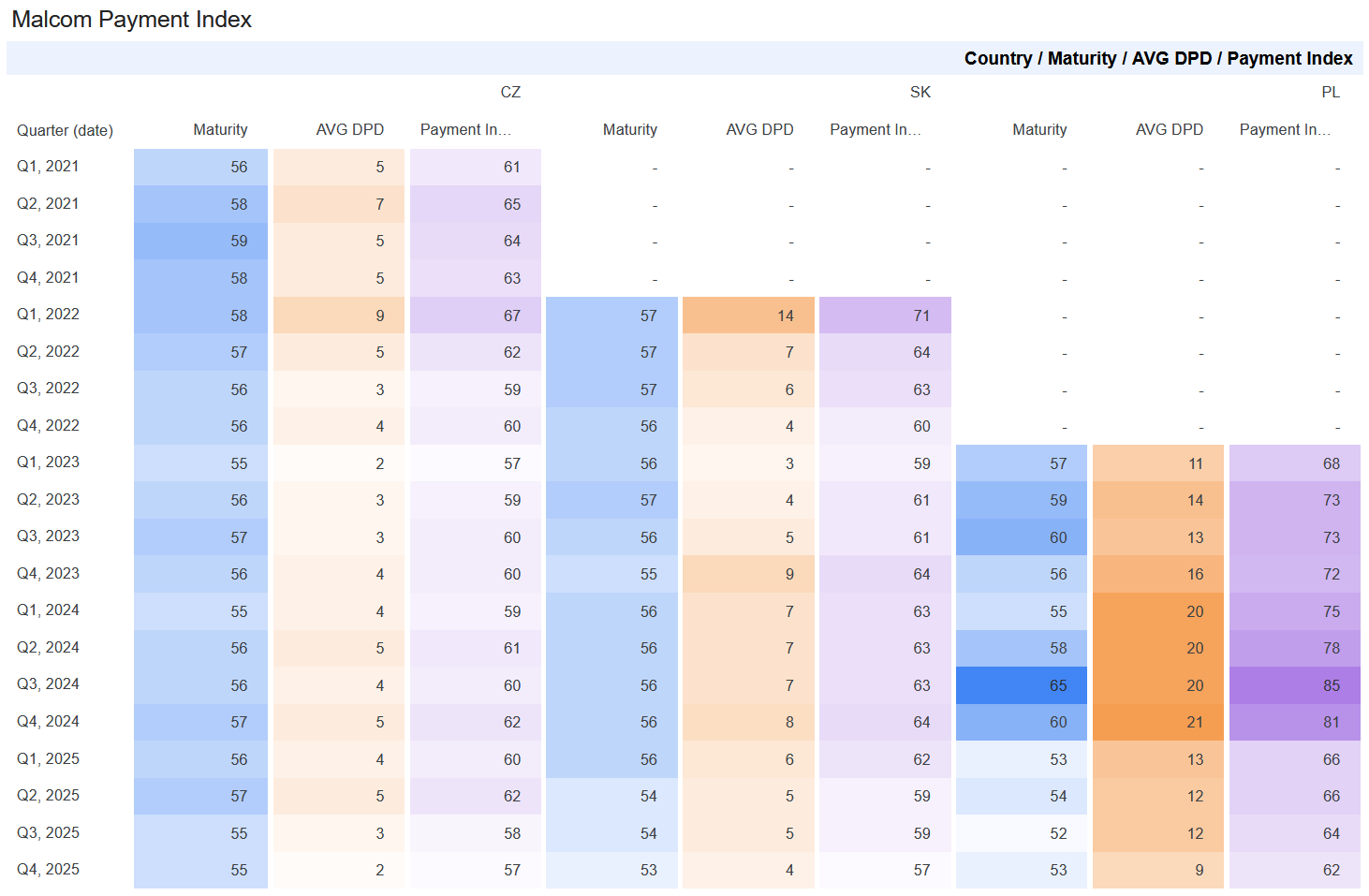
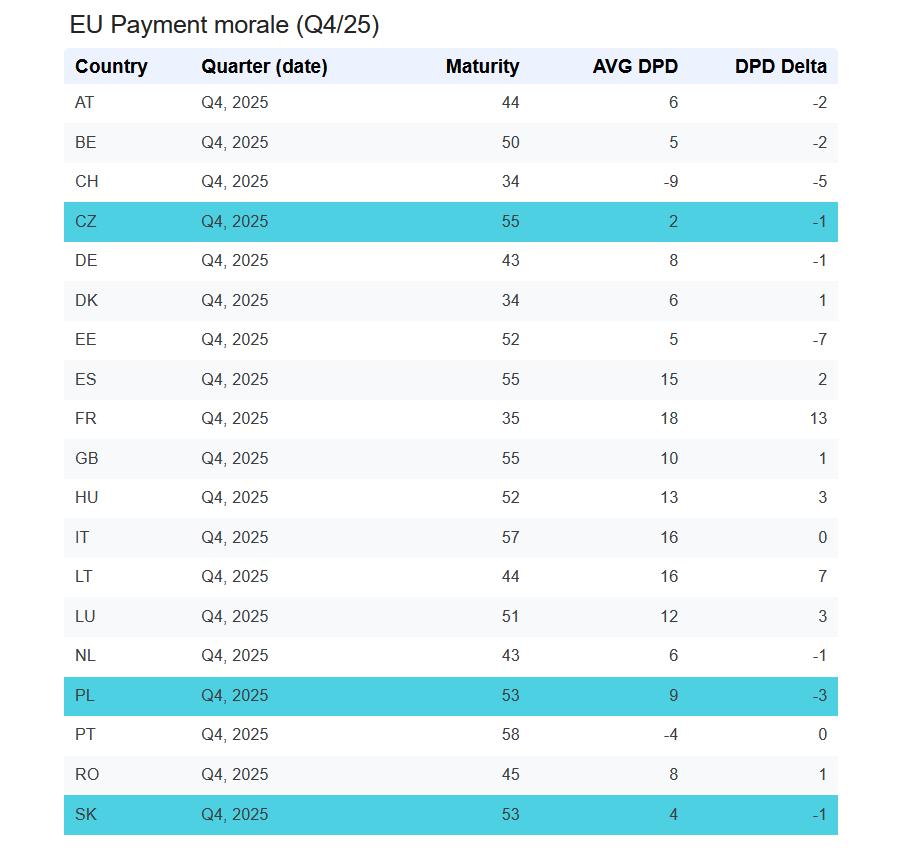
The Czech Republic wrapped up 2025 with the most promising results of the trio. On average, companies were waiting 55 days for payment, with payments arriving only 2 days after the due date. While this is a vast improvement from the 5-day delay seen a year earlier, the question remains: how much longer should you be waiting for invoices to clear?
This progress is certainly encouraging, but let’s face it – even in markets like Czechia, 55 days to receive payment is still far from ideal. As a carrier or business owner, waiting nearly two months can hurt your ability to cover operational costs, pay drivers, or invest in the future of your fleet.
What’s working in Czechia? Payment discipline is improving, but we can’t ignore the fact that delayed payments still affect the industry overall. As Jaroslav Ton, CEO of Malcom Finance, points out, factoring remains crucial to bridge that gap and maintain cash flow. Have you explored how factoring can help you reduce the stress of waiting for payments?
Slovakia’s performance in Q4 2025 showed positive momentum. The average payment term was 53 days, with payments arriving on average 4 days after the due date. While this was an improvement from last year’s 8-day delay, we must ask: Is it enough to keep your business running smoothly without having to rely on external financing?
Slovakia has demonstrated steady improvement, yet payment delays still pose a real challenge, especially for small and medium-sized businesses. The road freight market here showed significant volatility, which means carriers are still facing market uncertainty. However, the good news is that payment discipline is slowly getting better.
This positive shift, supported by factoring solutions, could maintain smoother cash flow of Slovak companies without waiting for weeks for overdue invoices.
Poland has seen substantial improvement in payment behaviour, but it remains the market with the longest delay in this trio. At the close of 2025, payment terms averaged 53 days but companies still waited an additional 9 days for invoices to be fully paid.
For carriers and drivers, this long wait can be a constant challenge. In a market that sees a significant amount of cross-border freight, the pressure to keep up with expenses like fuel, leasing, and employee wages only increases when payments come in late. But there’s a silver lining: compared to the previous year, payment delays shrank by over half, and the overall waiting time decreased to 62 days from 81.
That’s a step in the right direction but it’s clear that factoring continues to be a vital tool for Polish businesses. As the largest road freight market in the EU, Poland’s improvements are essential but payment delays still create a significant strain.
Across the board, payment discipline improved in Q4 2025 compared to the previous year, but one thing remains clear: payments are still taking too long. The Czech Republic, Slovakia and Poland all show progress, but when your business is built on tight margins and unpredictable payment cycles, it’s hard to breathe easy.
How do you keep your operations running smoothly while waiting for payments to trickle in? Factoring is a simple solution to manage cash flow, especially when payment terms stretch to 55 days or longer. If you haven’t considered factoring yet, perhaps now is the time to explore how it can work for you.
Are you feeling the strain of late payments in your business? If your customers are still taking too long to pay, would you benefit from immediate access to cash? Let’s talk about how we can help you bridge the gap!
The transport sector is facing a year of cautious optimism in 2026. While contract road freight rates are rising, spot rates remain soft and cost pressure continues to linger. But there’s good news – your payment discipline doesn’t have to be a source of stress.
Improved payment practices across Czechia, Slovakia, and Poland signal a positive trend but even in markets with stronger payment behaviour, the road ahead still demands smart liquidity management. The businesses that thrive will be those that embrace both growth and financial stability. Be ready to position your business for success!
Remember, we’re here to help you navigate the challenges of cash flow, so you can focus on growing your business. Don’t let late payments hold you back – reach out today and let’s discuss how we can support your journey toward better financial health. Schedule a no-obligation consultation with our advisor, who will discuss your company’s current situation and propose optimal solutions:
- Share:
- Email ↗
- Facebook ↗
- LinkedIn ↗

Your money will be available immediately with no hidden fees.

You always have enough money for operating costs and unexpected expenses.

You have a strong partner in case your customer fails to pay on time.

Verify their payment history and reduce the risk of financial loss.